
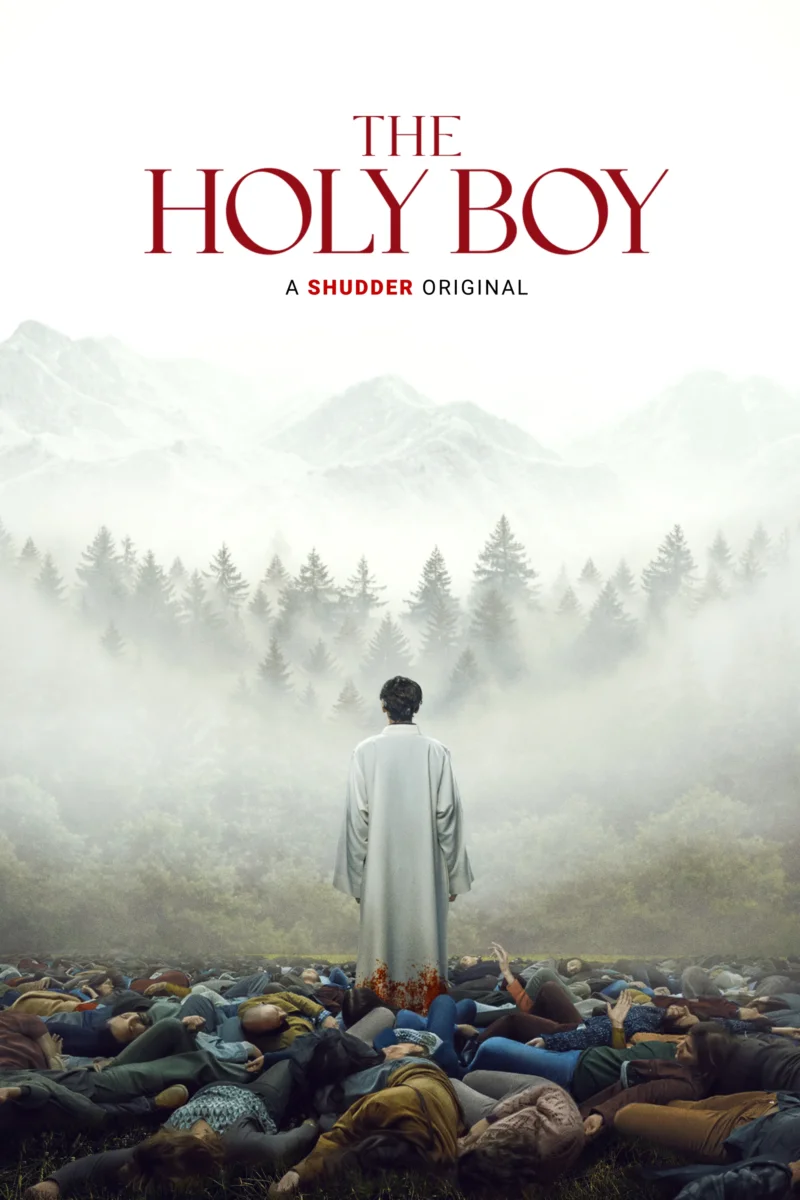
- The Holy Boy (2025)
- Original title: La valle dei sorrisi (The Valley of Smiles)
- Cast: Michele Riondino (Sergio Rossetti), Giulio Feltri (Matteo Corbin), Romana Maggiora Vergano (Michela), Paolo Pierobon (Mauro Corbin), Roberto Citran (Father Attilio), Diego Nardini (Lorenzo)
- Director: Paolo Strippoli
- Writers: Paolo Strippoli, Jacopo Del Giudice, Milo Tissone
- Distribution: Vision Distribution (Italy); Shudder (North America, UK, Ireland); Knight Cap (Australian rights)
- Production: Fandango, Nightswim, Spok Films
- Release Date: 30 August 2025 (Venice public premiere); 17 September 2025 (Italian cinemas); 27 November 2026 (Shudder announced premiere)
- Country: Italy / Slovenia
- Language: Italian, subtitled
- Runtime: 122 minutes
- Watched on: Shudder advance screener
- Review by: Mother of Movies
This review of The Holy Boy is spoiler-free. The film’s darker revelations and ending are kept safely behind the spoiler section at the end.
The Holy Boy (2025) Review Gives a Sinister Kind of Salvation
A fifteen-year-old boy who can take away people’s suffering sounds like a miracle. Paolo Strippoli’s The Holy Boy takes a gift of healing sorrow and turns it into something increasingly cruel.
I thought this was incredible. There’s religion, grief, manipulation and a terrific examination of what happens when a child with enormous power is never allowed to discover who he is. More importantly, there’s the uncomfortable possibility that Matteo Corbin might be just as dangerous as the people exploiting him.
The Happiest Town in Italy
Sergio Rossetti (Michele Riondino) arrives in Remis to take up a temporary position as a physical education teacher. He’s a former judo champion, although you’d never know it from the state, he’s in. Unshaven, withdrawn and drinking himself into oblivion. Sergio seems determined to avoid any meaningful contact with the people around him.
Unfortunately for Sergio, he’s moved to a town that takes happiness very seriously.
The residents are friendly, welcoming and protective of their cheerful little community. Even when Sergio is unpleasant, Michela (Romana Maggiora Vergano), who works at the local inn, seems more concerned about his unhappiness than his behavior.
What I particularly liked is that this isn’t the usual Stepford-style happiness. Nobody is wandering around with ridiculous permanent smiles or speaking in unison. They’re simply relieved of their sadness.
Their happiness comes courtesy of Matteo Corbin (Giulio Feltri), a quiet teenager with the ability to remove emotional suffering through an embrace.
For the residents, Matteo is something close to a living god. For Sergio, he’s initially just another student who should be participating in physical education like everybody else.
A Boy Who Belongs to Everybody Else
Matteo has very little freedom.
He’s driven to and from school, excused from physical education and watched over by adults who dictate almost every aspect of his existence. His days revolve around a purpose assigned to him long before he could possibly understand what it meant.
Sergio does something unusual. He treats Matteo like a normal kid.
He encourages him to try judo and speaks to him without the reverence everybody else has adopted. Matteo seems genuinely drawn to this, and their developing relationship becomes the emotional center of the film.
One of my favorite details involves Sergio’s pet bird, Oslo, who lives in a cage. Matteo questions why the bird can’t be let out, and it’s a wonderfully simple observation with rather obvious implications. Strippoli doesn’t need a grand speech about freedom when a boy who has never been allowed to live independently can recognise another creature’s captivity.
But there’s another side to Matteo, and the film takes its time revealing it.
As we begin to see how unhappy he is with his responsibilities, his behavior acquires an increasingly unpleasant quality. There are flashes of resentment and malice beneath his quiet demeanor, enough to suggest that the adults around him haven’t really asked many questions about how he does what he does.
It’s a tiny change in perspective, but like Sergio, I felt like Matteo should have some freedom. I was also becoming considerably less certain about what having agency and having a superpower might look like. We’ve had enough stories like that though, so this wasn’t something I could predict.
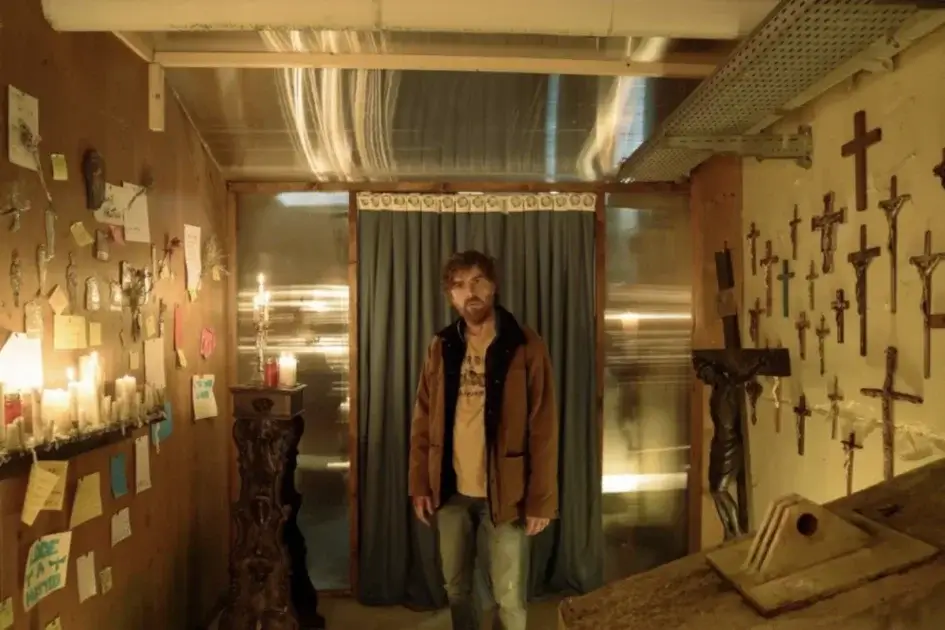
Michele Riondino and Giulio Feltri Are Superb
Riondino’s transformation is beautifully handled.
The Sergio we meet is a mess. His unshaven face, exhausted appearance and excessive drinking suggest someone who has stopped caring about himself. As his time in Remis begins to change his outlook, the difference is visible in small increments.
He shaves. He starts jogging. He takes an interest in another person. His shoulders seem lighter.
It’s a convincing progression because Riondino doesn’t suddenly become a different character. We see somebody who has been carrying an enormous amount of hurt begin to function again.
Feltri is equally impressive as Matteo, particularly in the way he presents a boy who can appear terribly vulnerable one moment and quietly threatening the next.
His pale hair and eyelashes give him an unusual appearance, but it’s his expressions that do much of the work.
He’s also discovering that he has desires and feelings that don’t fit comfortably into the role everybody expects him to fulfil.
The performances complement each other beautifully.
Neither fully understands what he’s dealing with.
Religion, Rituals and a Very Convenient Miracle
The religious elements are especially effective because The Holy Boy doesn’t behave like a conventional possession film.
There are robes, prayers and church gatherings, but Matteo is the only service on offer.
It looks like worship, although the distinction between devotion and personal benefit becomes increasingly difficult to ignore.
The townspeople mostly regard Matteo as their god. His image is treated with the kind of belief usually reserved for religious figures.
Yet this is hardly a conventional belief system. The church provides an acceptable setting for something far stranger, allowing the adults to treat Matteo’s abilities as a sacred duty rather than question the life they’ve arranged for him and the mask they are creating for everyone else.
Remis is full of cool blues, greys and bare-looking trees, while occasional red lighting interrupts that otherwise subdued appearance.
The red scenes caught my attention early. I’d want another viewing before deciding whether each appearance corresponds to a particular emotion, but they feel like a warning in hindsight.
By the time the more sinister elements take over, we’ve already spent enough time with him to appreciate why he might resent the world around him.
The Trouble with Burying Grief
Anyone who’s experienced a terrible loss knows that the temptation to push those feelings aside can be enormous. Sometimes simply getting through the day takes everything you’ve got. But grief doesn’t disappear because we refuse to acknowledge it, and suppressing painful emotions can have consequences of its own. The Holy Boy takes that recognisable human experience and gives it a supernatural dimension.
Matteo’s circumstances are considerably more troubling. He’s expected to accommodate suffering he hasn’t personally experienced, without anyone appearing particularly concerned about what that might be doing to him.
Matteo isn’t allowed to understand his own powers, let alone decide how to use them. His identity has been constructed around what he can provide for other people, leaving him to discover his capabilities and limitations for himself.
In recent supernatural horror films such as Weapons, Obsession and Vash, control has been central to the horror, with supernatural influence allowing one person to interfere with another’s freedom.
Strippoli approaches similar territory through a gifted child. The result has echoes of Firestarter and Carrie, where extraordinary abilities become especially dangerous when combined with being a young person.
The possibilities are enormous, and not all of them are pleasant.
Rating and Verdict of The Holy Boy
At 122 minutes, The Holy Boy has room to let you know the characters, and I think it benefits from that time.
The final stretch is particularly absorbing.
I was sitting there wondering which direction Strippoli would take. Would Matteo be punished for what he could do? Would he ever understand what he was?
I’m still a little divided about where Strippoli chooses to stop.
Could he have been a superhero under different circumstances? Was there ever a chance for him to use his abilities without manipulating or hurting people? Or was something more dangerous always going to emerge, regardless of how he was raised?
The film doesn’t settle those questions, and perhaps it couldn’t.
The Holy Boy is rated
4.5 Miserable Miracles out of 5
Happiness Has a Victim
The happiest village in Italy has a rather ugly arrangement with a fifteen-year-old boy. The Holy Boy turns the relief of suffering into something increasingly cruel, supported by two excellent central performances and an idea that gets nastier the longer you think about it.
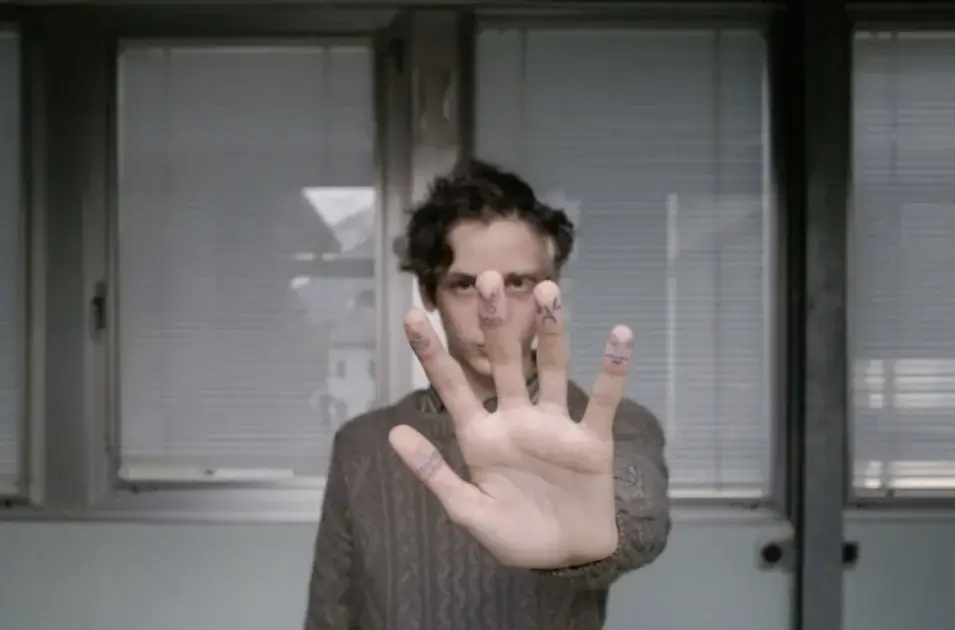
Filmmaker Stamp: Paolo Strippoli
Born in Corato, Italy, in 1993, Paolo Strippoli studied filmmaking at Rome’s Centro Sperimentale di Cinematografia and won the Franco Solinas Screenwriting Award in 2019 alongside Jacopo Del Giudice and Milo Tissone. He went on to co-direct Netflix’s A Classic Horror Story (2021) with Roberto De Feo before making Piove (Flowing, 2022).
The Holy Boy is a particularly personal project. In an interview with Eye for Film, Strippoli described growing up gay in southern Italy and struggling with his identity, experiences he channeled into Matteo’s adolescence. He also spoke about how something as comforting as a hug can become a form of imprisonment. It’s a revealing insight into a filmmaker who has found a rather inventive way to turn familiar human experiences into horror.
Eye For Film interviewed Strippoli and the full article can be found here.
Similar Titles: Movies Like “The Holy Boy”
- Weapons (2025) — A community confronted by influence and some dreadful decisions.
- Obsession (2026) — Desire, personal autonomy and the consequences of interference.
- Boarding School (2018) — Luke loves his grandmother and is sent to a special place to make it all better.
- Vash (2023) — Cruel psychological control and the horrifying ease of taking away choice.
- Firestarter (1984) — A young person with extraordinary powers that adults are desperate to control.
- Mayfair Witches (2023) — Is a TV series about witches who grew up with generational powers.
Where to Watch Holy Boy
The Holy Boy Is Streaming On:
“The Holy Boy makes a miracle out of suffering, then asks why everyone except the boy gets to be happy.”
— Mother of Movies
Spoiler Section and Ending of The Holy Boy
Mother of Movies: Spoiler Territory
The Holy Boy: Powers, Possession and the Ending Explained
The Holy Boy has some nasty secrets. Here’s what Matteo’s powers reveal about the town, his childhood and the final confrontation.
The Holy Boy
Director: Paolo Strippoli
Date Created: 2025-08-30 14:03
4.5
Pros
- A refreshingly ordinary version of collective happiness.
- Religious imagery gives familiar supernatural ideas a new purpose.
- Sergio's emotional recovery unfolds through convincing physical changes.
- Matteo's restricted childhood makes the central conflict considerably richer.
- The changing balance between affection and control creates a fascinating finale.
Cons
- The ending stops a little sooner than I would have liked.
- Some secondary villagers exist mainly to reinforce the town's shared mentality.
- The film's restraint leaves some intriguing ideas about Matteo underdeveloped.
